


One Shoulder Dresses for Women
Most necklines are static. A V-neck, a round neck, an off-shoulder — they create a fixed visual zone and hold it. The one-shoulder neckline does something different: it creates a diagonal. The line runs from the covered shoulder's high point across and down to the bare shoulder zone, and the eye follows it. Follows it from one end to the other, across the full width of the upper body, reading the neck and collarbone as longer and the waist as more defined at the narrow mid-point of the diagonal's travel.
This is what makes the one-shoulder dress specifically different from an off-shoulder dress — not the degree of shoulder exposure but the direction of the line. Horizontal is balanced. Diagonal is dynamic.
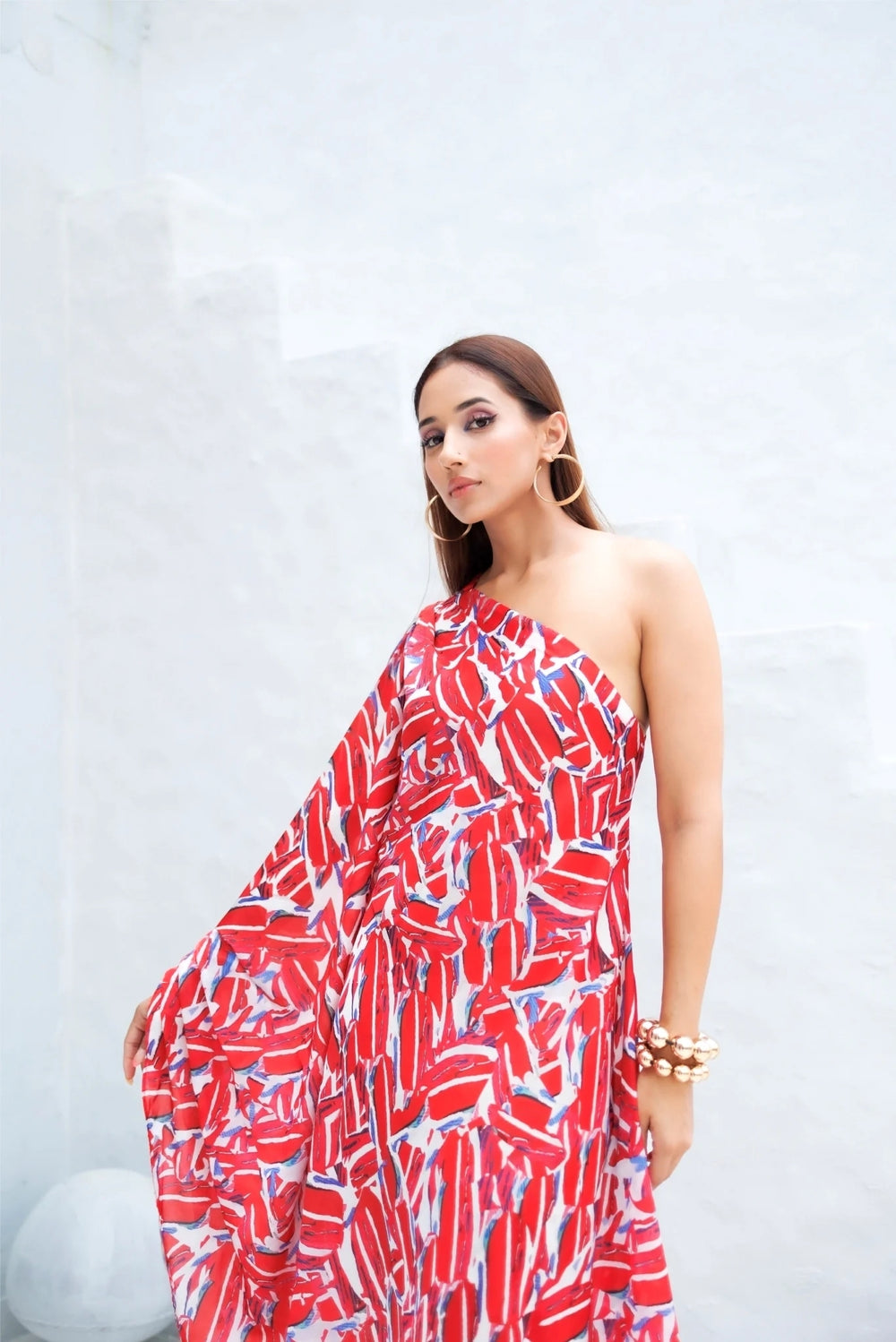
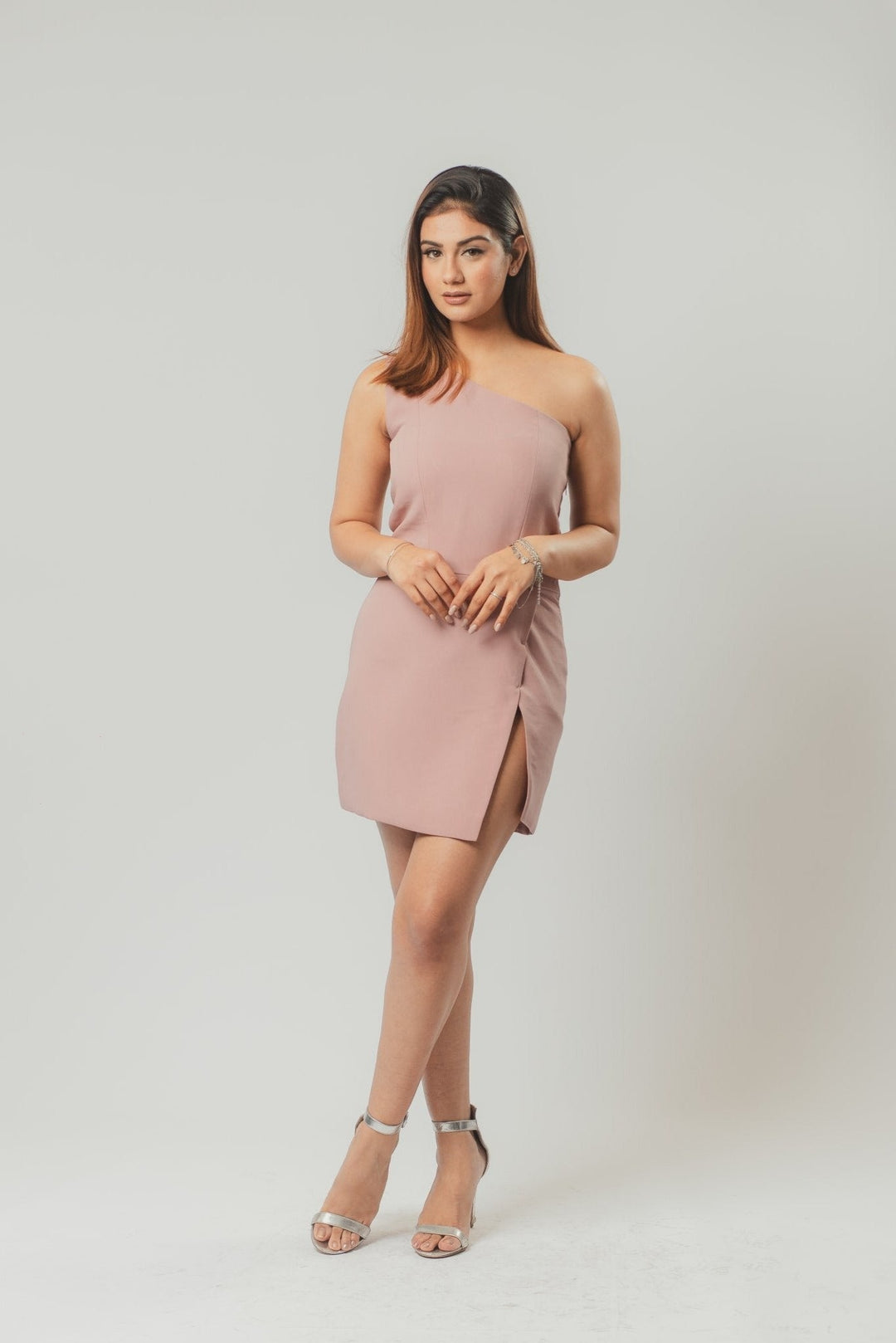
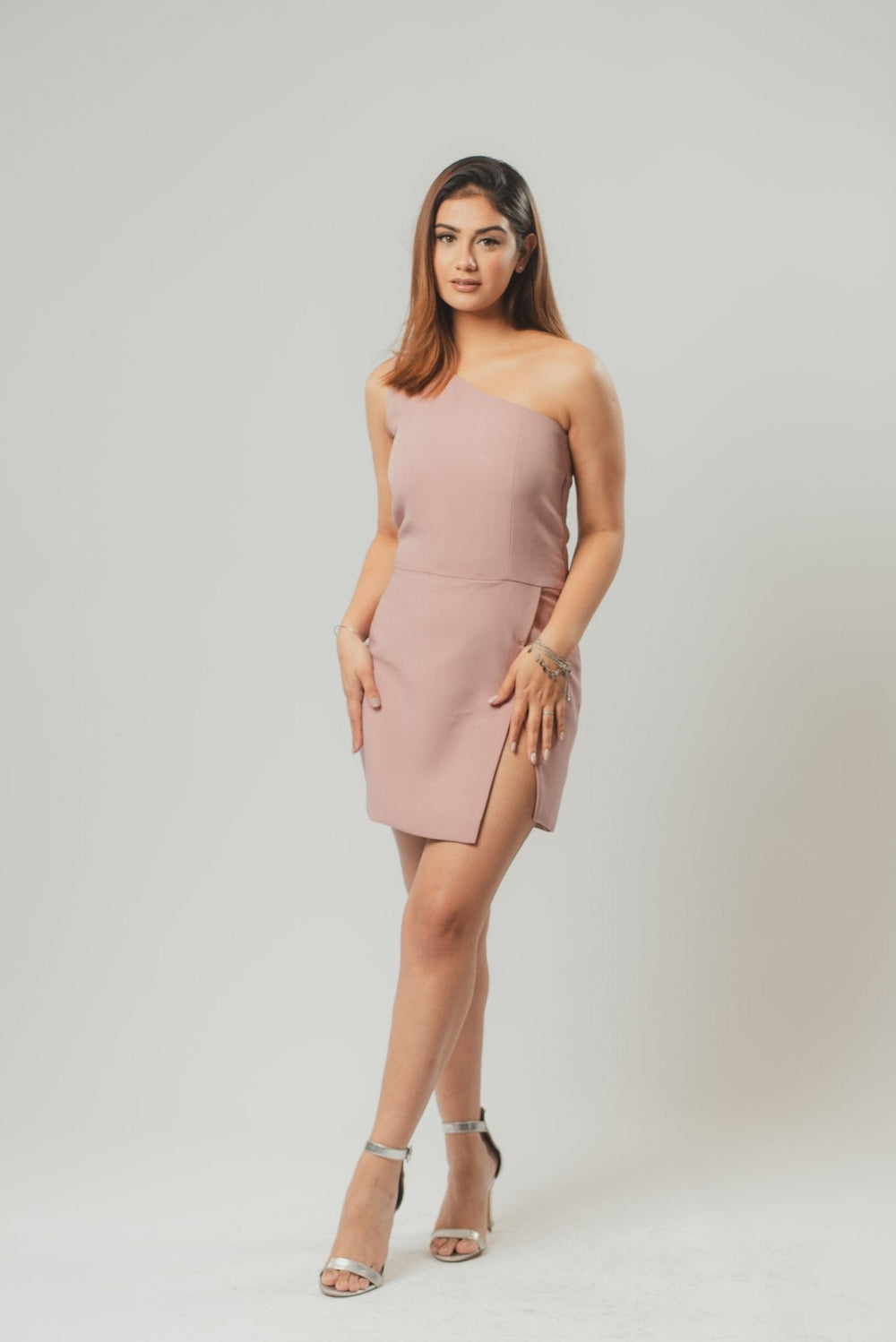
The Nolabels one-shoulder dresses collection spans this diagonal across nine directions. The Ombre Fuchsia and Art Print Off Shoulder Kaftan Dresses for the resort and flowing occasion register. The Lucid Dream Asymmetrical Dress — thigh-high slit and asymmetric neckline — for the most editorial one-shoulder expression in the collection.
The diagonal that moves. No label required.


One Shoulder vs Off Shoulder — The Distinction That Matters
The most commercially important education this page provides is a distinction that Indian fashion content routinely misses: the one-shoulder dress and the off-shoulder dress are not the same construction.
The off-shoulder dress (Bardot neckline — covered comprehensively on the off-shoulder dresses for women page): The neckline runs horizontally below both shoulder lines, leaving both shoulders bare. Symmetric. Creates: horizontal visual width at the collarbone, balanced proportion on both sides of the body, the simultaneous exposure of both shoulders.
The one-shoulder dress (asymmetric neckline): A strap, structured seam, or fabric panel covers ONE shoulder while the other shoulder and arm are completely bare. The neckline runs diagonally from the covered shoulder's high point across to the bare shoulder zone. Asymmetric. Creates: diagonal visual energy, directional eye movement across the upper body, asymmetric proportion, visual movement at rest.
The visual experience of wearing each is completely different. An off-shoulder dress creates a wide, balanced, horizontal emphasis at the collarbone — the same emphasis on both sides of the body, like a frame for the face. A one-shoulder dress creates a diagonal that moves the eye from one side of the body to the other — the covered and bare sides create visual contrast, and the diagonal between them creates directional energy that static necklines cannot achieve.
Both constructions are in the Nolabels one-shoulder collection. The Ombre Fuchsia and Art Print Off Shoulder Kaftan Dresses use the off-shoulder (Bardot, both shoulders bare) construction in a flowing kaftan format. The Lucid Dream Asymmetrical Dress uses the true one-shoulder asymmetric construction (one side covered, one bare, with the diagonal neckline). For buyers specifically seeking the symmetric off-shoulder experience: the off-shoulder dresses for women collection has the most comprehensive selection. For buyers seeking the asymmetric diagonal one-shoulder: the Lucid Dream and the broader nine-direction collection here.
The Diagonal's Three Visual Effects — What Makes One-Shoulder Dresses Unique
The one-shoulder dress's diagonal neckline creates three simultaneous visual effects that no symmetric neckline achieves:
Effect 1: Elongation Through Diagonal Length
The diagonal line from the covered shoulder's high point to the bare shoulder zone is geometrically longer than any horizontal neckline of the same chest width. Diagonals are always longer than the horizontal or vertical measurements between the same two points — this is basic geometry (the hypotenuse of a right triangle is always longer than either leg). The eye follows this longer line, reading the upper body's visual breadth as greater and the neck-to-shoulder length as longer.
This elongation effect is directional rather than symmetric: the eye travels the diagonal in one direction (from the covered shoulder down to the bare shoulder), creating a sense of upper body length on the diagonal axis specifically. Where the off-shoulder creates width (the horizontal line reads as wide), the one-shoulder creates directional length (the diagonal line reads as long and sweeping).
Effect 2: Waist Discovery Through Diagonal Tension
A diagonal line creates visual tension between its two endpoints. In the one-shoulder neckline, the tension runs from the covered shoulder (high, one side) to the bare shoulder or armhole (lower, other side). As the eye travels this diagonal, it passes the waist — the body's narrowest visible point between the two endpoints. The diagonal's tension highlights this narrowest point as the contrast between the line's two ends.
This is the one-shoulder dress's most underappreciated proportion effect: the diagonal's tension makes the waist more visible than any horizontal or vertical neckline does. The waist is the mid-point of the diagonal's contrast — covered, structured side above and to one side; bare, exposed side below and to the other side. The waist sits at the visual fulcrum between these two contrasting zones.
Effect 3: Movement and Visual Energy at Rest
Diagonal lines create visual movement in still images and on static figures. This is an established principle of visual design: horizontal lines create stability (they echo the horizon, the floor, the natural state of rest); vertical lines create height (they echo standing figures, columns, trees); diagonal lines create movement and energy (they echo falling, rising, motion).
A one-shoulder dress's diagonal neckline brings this movement energy to the garment. Standing still in a one-shoulder dress, the eye reads the diagonal's motion: the line appears to travel from the high covered shoulder down to the bare lower shoulder. In motion — walking, dancing, turning — the diagonal's visual energy is amplified by the physical movement, creating the most photographically dynamic neckline in the dress vocabulary.
This is what makes the Lucid Dream Asymmetrical Dress so specifically editorial: it uses the diagonal in two simultaneous body zones (neckline + thigh slit) — two diagonals moving in different directions across the body, creating overlapping visual energies that produce the dress's characteristic non-linear, in-motion visual even when the wearer is still.
Ancient Origins — From Greek Drapery to Contemporary Fashion
The one-shoulder dress is among the oldest garment constructions in human history, predating the modern concept of "fashion" by thousands of years.
Ancient Greek dress used single-shoulder draping extensively. The chiton (a long rectangular fabric draped and pinned at the shoulder) and the peplos (a heavier fabric version of the chiton) were both often fastened at one shoulder, creating the single-shoulder asymmetric silhouette as a functional consequence of the draping method. Roman dress adopted similar constructions — the toga, though associated with both-shoulder draping in its formal form, was worn with one-shoulder exposure in various informal applications.
The ancient one-shoulder construction was not primarily a fashion choice — it was a functional consequence of how fabric was draped and secured without sewn seams. Fabric was folded, wrapped, and pinned at one or both shoulders, and the single-shoulder version was often more practical for movement (the bare arm had full range of motion) and more comfortable in warm Mediterranean climates.
The modern one-shoulder dress references this ancient construction not in its technique (modern garments use sewn seams and constructed necklines rather than draping) but in its visual: the asymmetric silhouette and the diagonal line from covered to bare shoulder are the same ancient visual in contemporary construction. When you wear a one-shoulder dress in 2026, the diagonal on your shoulder has been there for approximately 3,000 years.
Nine One-Shoulder Dress Directions
1. One-Shoulder Kaftan Dress — Resort and Flowing Occasion
The confirmed Ombre Fuchsia Off Shoulder Kaftan Dress and Art Print Off Shoulder Kaftan Dress represent the collection's most comfortable and most vacation-appropriate direction. As established on the Kaftan Dresses page: the kaftan's loose, flowing construction makes it the most comfortable full-coverage dress available — it drapes from the shoulders without conforming to any body measurement below.
The one-shoulder or off-shoulder kaftan resolves the kaftan's traditional visual limitation: flowing fabric that covers the body fully can read as shapeless when it has no visual focal point. The asymmetric or off-shoulder neckline provides that focal point — the shoulder and collarbone zone becomes the visual's anchor, with the flowing fabric below creating comfortable, coverage-rich movement.
The Ombre Fuchsia colourway — a gradient from deep fuchsia to a lighter tone — is specifically photogenic in outdoor, natural light settings (coastal resorts, garden parties, beach evenings) where the ombré gradient catches the varying light of outdoor environments. The Art Print direction uses abstract or artistic surface pattern that reads as considered and fashion-aware without requiring embellishment.
Best for: Resort and beach vacations, Goa and coastal occasions, outdoor parties, garden events, casual-to-semi-formal occasions where comfort and visual impact must coexist Style tip: Kaftan one-shoulder dresses are most photographically powerful in natural outdoor light — the flowing fabric's movement in coastal breezes creates the visual dynamism that the kaftan's loose construction produces most dramatically.
2. One-Shoulder Maxi Dress — Formal Occasion Drama
The one-shoulder maxi dress is the format that most directly references the ancient Greek peplos and chiton origin — a long, floor-length dress with a single shoulder construction creating the most dramatically asymmetric silhouette available. As referenced in the existing below-grid: "floor-length style with a single shoulder feature... quality, lightweight fabrics that flow and create a dramatic effect of 'otherworldly', almost mystical allure."
The one-shoulder maxi is specifically appropriate for Indian formal social occasions — wedding receptions as guest, formal dinners, cocktail parties, destination events. The combination of floor length (formal through coverage) and asymmetric neckline (fashion-forward through design) creates the professional-celebratory crossover register established across the project: formal enough for the occasion's structure, fashion-forward enough for its aesthetic.
Explore the maxi dresses for women collection for the full maxi range.
Best for: Formal social occasions, wedding receptions as guest, cocktail parties, formal dinners, occasions requiring floor-length formality with fashion-aware neckline design
3. One-Shoulder Bodycon Dress — Figure-Forward Evening
The one-shoulder bodycon dress combines the bodycon's form-following silhouette with the one-shoulder's diagonal visual. As established on the Bodycon Dresses page: the bodycon uses stretch fabric to follow the body's contours precisely. The one-shoulder neckline adds the diagonal's visual energy to the bodycon's figure-forward construction — the dress reveals the body through fitted construction while the neckline creates visual movement through asymmetric design.
The one-shoulder bodycon is specifically the most editorial evening dress format: the bodycon communicates body-confidence; the one-shoulder communicates fashion-awareness; together they create the "I chose this deliberately for tonight" signal that occasion dressing requires.
Explore the bodycon dresses for women collection for the full bodycon range.
Best for: Evening parties, birthday celebrations, sangeet, club nights, high-energy occasions where body-forward dressing is the brief
4. One-Shoulder Pleated Dress — Textured Elegance
The pleated one-shoulder dress applies the one-shoulder diagonal to a pleated skirt construction — as established on the Pleated Dresses page, pleats create vertical lines through the skirt that add visual structure and movement simultaneously. Combined with the one-shoulder's diagonal at the neckline, the pleated one-shoulder dress creates two different types of visual movement in a single garment: the diagonal across the upper body + the vertical pleats through the skirt.
As noted in the existing below-grid: "The pleats add movement and dimension, and a single shoulder adds a sophisticated touch... highly recommended for events when you want to look different in an elegant, sophisticated style."
Best for: Formal social occasions, semi-formal events, occasions where structural sophistication is the brief, evening dinners where both elegance and fashion-awareness are required
5. One-Shoulder Floral Dress — Summer and Outdoor Register
The one-shoulder floral dress applies the diagonal's visual energy to the floral print's surface pattern — as established on the Off-Shoulder Dresses page: printed fabric appears less transparent and more defined than solid-colour fabric of identical construction. The floral + diagonal combination creates a specific register: the floral print communicates outdoor, summer, and romantic occasion; the one-shoulder's diagonal communicates fashion-forwardness and design intention.
As noted in the existing below-grid: "vibrant floral prints and an asymmetric neckline make this perfect for summer events or garden parties... light and breezy, comfortable yet chic for warm-weather outings."
Explore the floral dresses for women collection for the full floral range.
Best for: Garden parties, outdoor summer occasions, brunch, casual social events, warm-weather outings where comfort and visual interest are both required
6. One-Shoulder Party Dress — Maximum Occasion Impact
The one-shoulder party dress — with ruffles, sequins, or statement cuts as confirmed in the existing below-grid — is the collection's most high-energy evening direction. The one-shoulder's diagonal + surface embellishment (sequins, ruffle, bold colour) creates compound visual impact: the neckline's asymmetric energy + the surface's occasion-register signal.
As noted in the existing below-grid: "The bold, eye-catching design will reveal ruffles, sequins, or sleek cuts to get you noticed at any celebration. This garment is best paired with statement jewelry and heels for a glamorous look."
Explore the party wear dresses collection for the full party range.
Best for: Birthday parties, Diwali celebrations, New Year's Eve, sangeet, any high-energy occasion where maximum visual impact is the brief
7. One-Shoulder Midi Dress — Versatile Occasion Sophistication
As noted in the existing below-grid: "a perfect one-shoulder midi dress for people who want to balance casual and formal looks. The hemline at the mid-length makes it great for both daytime and night. The style in the single shoulder adds flair."
The midi length is confirmed across multiple project pages as the widest- occasion-appropriate dress length in Indian contexts. The one-shoulder midi specifically is the collection's most widely occasion-appropriate single format: midi length (appropriate from smart-casual to semi-formal), one-shoulder diagonal (fashion-forward without excessive exposure), moderate construction (not body-forward like bodycon, not maximally flowing like maxi).
Explore the midi dresses for women collection for the full midi range.
Best for: Day-to-evening occasions, semi-formal events, occasions requiring versatility across the full casual-to-formal spectrum
8. One-Shoulder Mini Dress — Playful Contemporary Edge
As noted in the existing below-grid: "combines playfulness of old charm with a modern edge. The short length and asymmetrical neckline make it perfect for parties or casual outings."
The one-shoulder mini creates compound asymmetry — the asymmetric neckline (one shoulder bare, one covered, diagonal line) + the short hemline (legs exposed) creates two simultaneous exposure zones. This compound approach is the most fashion-forward and most specifically contemporary direction in the one-shoulder collection.
Explore the mini dresses for women collection for the full mini range.
Best for: Party occasions, night out, fashion-forward casual evenings, occasions where playful contemporary dressing is the brief
9. One-Shoulder Indo-Western Dress — The Specifically Indian Direction
The most specifically India-relevant direction in the collection. The one-shoulder neckline applied to Indian-register fabrics and design vocabulary creates the most contemporary Indo-Western hybrid available — specifically because the one-shoulder is among the oldest and most culturally neutral neckline constructions (originating in ancient Greece and Rome before any modern national dress vocabulary existed) applied to the richest Indian textile traditions.
As noted in the existing below-grid: "Our one-shoulder Indo-Western dress brings together two styles: tradition and modernity. The rich fabrics merge with the modern cuts. Perfect for weddings or those cultural events where you want to make some stylish impressions."
For Indian women navigating the wedding season and cultural occasion calendar who want to communicate both cultural connection and contemporary fashion-awareness: the Indo-Western one-shoulder dress is the specific garment that achieves both simultaneously. The Indian textile heritage (silk-adjacent fabrics, embroidery, rich colours) communicates cultural engagement; the Western asymmetric neckline communicates contemporary fashion fluency.
Explore the western dresses for women collection for more Indo-Western direction.
Best for: Wedding receptions as guest, cultural celebrations, formal family occasions, occasions where Indo-Western dressing is the brief
The Confirmed Collection — Three Pieces, Full Spectrum
Ombre Fuchsia Off Shoulder Kaftan Dress
The collection's most resort-appropriate piece. The ombré fuchsia gradient — a colour transition from deep, saturated fuchsia at one end to a lighter tone at the other — is specifically designed for natural light photography: the colour gradient reads differently in different light conditions, making the dress photogenically varied across indoor and outdoor settings.
The kaftan format (flowing, full-coverage below the shoulder zone) with an off-shoulder or one-shoulder neckline creates the specific "covered but fashion-forward" visual that resort and vacation dressing requires — the body is comfortably covered in flowing fabric while the neckline creates the visual focal point that prevents the kaftan's looseness from reading as shapeless.
At its confirmed sale price (53% off), this is among the most accessible premium-register pieces in the project.
Art Print Off Shoulder Kaftan Dress
The abstract/artistic print direction in the one-shoulder kaftan format. As established across multiple project pages (Casual Dresses, Vacation Dresses, Kaftan page): abstract print communicates considered, fashion- aware dressing. The "art print" name signals a print with artistic visual complexity rather than a conventional repeated pattern — likely an asymmetric, painterly, or graphic design that reads as specifically designed rather than commercially generic.
Abstract-print kaftans are specifically appropriate for creative, outdoor, and resort occasions where the print communicates visual sophistication without the formality of structured embellishment.
Lucid Dream Asymmetrical Dress
The collection's most editorially complex piece and its most specifically "one-shoulder" construction. As established on the Slit Dresses page: the Lucid Dream uses two simultaneous asymmetric elements — the asymmetric one-shoulder neckline + the thigh-high slit — creating two diagonal lines on the body that produce overlapping visual energies.
The name "Lucid Dream" is the most accurately applied product name in the 83-page project: a lucid dream is an asymmetric, non-linear experience where normal spatial logic is suspended. This dress creates that non-linear spatial experience through two simultaneous diagonals — the neckline diagonal across the upper body, the slit diagonal at the leg — that move in different directions and create visual energy that cannot be attributed to any single design element but emerges from their interaction.
At its confirmed sale price (63% off from ₹3,999), the Lucid Dream is the most dramatically discounted piece in the collection and among the best-value editorial dresses in the project.
Styling a One-Shoulder Dress — The Asymmetry Rules
The jewellery rule (specific to one-shoulder): The one-shoulder dress creates an asymmetric visual with a bare shoulder on one side and a covered or strapped shoulder on the other. Jewellery placement responds to this asymmetry:
- Earrings: Statement earring on the BARE side (the side without the strap or structured neckline). The bare side is the focal zone — the earring amplifies the attention already directed to the bare shoulder zone. A smaller or no earring on the covered side.
- Necklace: Typically not recommended for one-shoulder dresses — the diagonal neckline already creates the neck-to-shoulder line that a necklace would compete with. If a necklace is worn: a very fine chain that follows the neckline's diagonal rather than sitting across it.
- Bracelets/cuffs: The bare arm is the one-shoulder dress's accessory zone — bracelets and cuffs at the bare wrist and forearm amplify the bare arm's visual rather than competing with the neckline.
The hair rule: As established on the Off-Shoulder Dresses page (hair up reveals the full shoulder) — the same principle applies to one-shoulder dresses with additional directional specificity: hair on the COVERED side (pinned back or up on the strapped/covered shoulder side) reveals the full bare shoulder on the other side. Hair falling over the bare shoulder partially covers the dress's design statement. The updo or hair-to-one- side creates maximum bare shoulder visibility.
The undergarment rule: The one-shoulder dress's undergarment challenge is specifically the strap. A regular bra strap on the bare side of a one-shoulder dress creates visible, disruptive cross-strap competition with the dress's neckline. Solutions:
- Strapless bra (the most universally applicable solution)
- Adhesive cups (for built-in or structured one-shoulder bodices)
- One-shoulder bra (a specific bra design with a single diagonal strap that mirrors the one-shoulder dress's own construction — the most elegant undergarment solution for this neckline)
- Built-in support in the dress (many constructed one-shoulder pieces have built-in cups or boning — check the product description)
Frequently Asked Questions About One Shoulder Dresses
What is a one-shoulder dress?
A one-shoulder dress has a neckline that covers one shoulder fully (through a strap, structured fabric, or constructed neckline) while leaving the other shoulder and arm completely bare. The neckline runs diagonally from the covered shoulder's high point across to the bare shoulder zone, creating an asymmetric silhouette. This diagonal creates three simultaneous visual effects: diagonal elongation of the neck-to- shoulder line, waist definition through diagonal tension, and visual movement at rest. The one-shoulder dress is distinct from the off-shoulder (Bardot) dress, which leaves both shoulders bare in a horizontal, symmetric neckline. The one-shoulder's asymmetry is its defining characteristic — it creates directional visual energy that symmetric necklines cannot achieve.
What is the difference between a one-shoulder dress and an off-shoulder dress?
The fundamental difference is symmetry. An off-shoulder (Bardot) dress leaves both shoulders bare — the neckline runs horizontally below both shoulder lines, creating a symmetric, balanced visual with horizontal width at the collarbone. A one-shoulder dress leaves only ONE shoulder bare — the neckline runs diagonally from the covered shoulder to the bare shoulder zone, creating an asymmetric diagonal with directional visual energy. The off-shoulder creates width and balance; the one-shoulder creates movement and direction. For a complete guide to the off-shoulder construction, see the off-shoulder dresses for women page.
What undergarment should I wear with a one-shoulder dress?
A strapless bra, adhesive bra cups, or a one-shoulder bra (a specific bra design with a diagonal strap that mirrors the one-shoulder neckline). A regular bra creates visible straps on the bare shoulder zone, competing with the dress's design statement. If the dress has built-in cups or boning (check the product description), a separate bra is not required. A one-shoulder bra is specifically designed for this neckline — its diagonal strap follows the dress's neckline construction, making it invisible while providing support. Strapless bras are the most accessible solution and appropriate for all one-shoulder dress constructions.
How should I style a one-shoulder dress for Indian occasions?
The asymmetric jewellery rule: statement earring on the BARE side only — the bare shoulder is the focal zone and a statement earring amplifies it. No necklace (the diagonal neckline already creates the neck-to- shoulder visual a necklace would compete with). Bracelets and cuffs at the bare wrist/forearm amplify the bare arm's visual. Hair up or pulled to the COVERED shoulder side reveals the full bare shoulder on the other side. For Indian celebrations: the one-shoulder dress in rich colours (deep jewel tones, ombré gradients) paired with minimal gold jewellery creates the most specifically Indian fashion-aware occasion look.
Is a one-shoulder dress appropriate for Indian weddings?
A one-shoulder dress in non-white, non-ivory colours (as established on the White Dresses page: avoid white and ivory at traditional Hindu weddings) is appropriate for Indian wedding receptions and cocktail events as a guest. The one-shoulder Indo-Western direction (rich Indian- register fabrics with the asymmetric neckline) is specifically appropriate for Indian weddings where both cultural connection and contemporary fashion-awareness are the dressing brief. For formal religious wedding ceremonies: the one-shoulder construction's shoulder exposure may not be appropriate in conservative family contexts — a one-shoulder dress with a shawl or dupatta that can be draped over the bare shoulder for the ceremony and removed for the reception provides versatility.
What occasions suit a one-shoulder kaftan dress?
The one-shoulder kaftan dress — as confirmed in the Nolabels collection through the Ombre Fuchsia and Art Print Off Shoulder Kaftan Dresses — is specifically appropriate for resort and vacation occasions: beach holidays, Goa and coastal settings, outdoor evening parties, garden events, and any occasion where maximum comfort with fashion-forward visual is the brief. The kaftan's loose flowing construction handles heat and outdoor environments practically; the one-shoulder or off-shoulder neckline provides the visual focal point that elevates the kaftan from purely casual to fashion-aware. Avoid the kaftan one-shoulder for conventional formal occasions (boardrooms, corporate formal, traditional religious ceremonies) where flowing casual fabric is not appropriate.
What is an asymmetric one-shoulder dress?
An asymmetric one-shoulder dress uses the one-shoulder construction as part of a broader asymmetric design — where the dress's asymmetry extends beyond the neckline to other design elements (hemline, draping, sleeves, or slit placement). The Lucid Dream Asymmetrical Dress confirmed in the collection is the most specifically asymmetric piece: it uses both an asymmetric neckline (one-shoulder diagonal) AND an asymmetric thigh-high slit (one leg revealed, one covered). Two simultaneous asymmetric elements create overlapping visual energies — the neckline's diagonal and the slit's diagonal move in different directions across the body, producing the editorial, non-linear visual that makes the dress specifically fashion-aware rather than conventionally elegant.
How does a one-shoulder dress create the impression of a longer neck?
The one-shoulder neckline creates diagonal elongation through geometry: the diagonal line from the covered shoulder's high point to the bare shoulder zone is geometrically longer than any horizontal neckline of the same chest width (diagonals are always longer than the horizontal measurement between the same two points). The eye follows this longer line, reading the neck-to-shoulder path as longer and more elongated than it actually is. Additionally, the one bare shoulder creates an uninterrupted vertical line from the ear to the bare shoulder to the arm — the same elongation principle as the off-shoulder neckline's upper body elongation effect (established on the Off-Shoulder Dresses page), now in a single-sided, diagonal application.
.
Popular Searches
Dresses For Women | Beach Wear Dresses For Women | Party Wear Dresses | Sweatshirt For Women | Shirts For Women | Short Dresses For Women | Floral Dresses For Women | Leather Jacket | Skirts For Women | Cargo Pants | Corset Tops | Hoodies For Women | Jumpsuits For Women | Party Wear Dresses | Maxi Dresses | Joggers For Women | Varsity Jackets | Floral Dresses For Women | Puffer Jacket For Women | Birthday Dress For Women | Long Dresses For Women | Winter Dresses | Sweaters For Women | Pants For Women | Organza Dresses | Jackets For Women | Oversized Shirts | Winter Wear For Women | Windcheaters | Western Dresses For Women | Midi Dresses For Women | Kaftan Dresses | Cotton Dresses For Women | Trousers For Women | Tube Tops | One Piece Dresses | Denim Jacket | Casual Dresses For Women | Beach Wear For Women | Corset Tops | Bodycon Dress | Formal Dresses | Satin Dresses | Cotton Shirts | Black Dresses For Women | White Shirts | Tube Tops | Denim Jacket | Full Sleeves Shirts

